
Telehealth Interpreting Services
Add a HIPAA-trained ASL or spoken language interpreter to any telemedicine visit. The interpreter joins your video platform as a participant - your clinical workflow doesn't change.

What is Telehealth Interpreting?
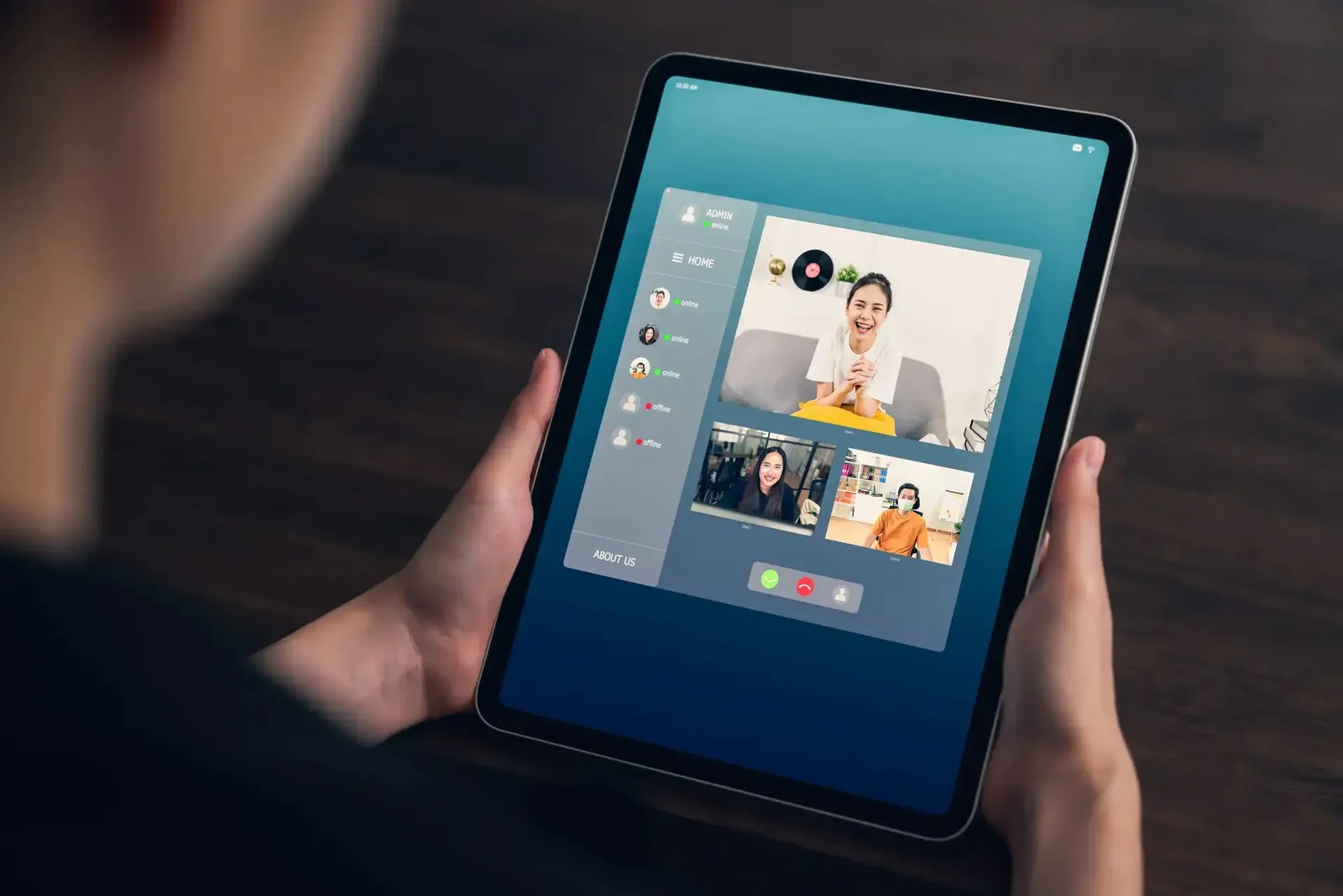
Telehealth interpreting places a qualified medical interpreter inside your virtual visit. The interpreter joins the same video session as the provider and patient - seeing, hearing, and rendering the conversation in real time so nothing is lost between screens.
It solves the specific problem telemedicine created: patients who are Deaf, hard of hearing, or limited English proficient can't simply "bring someone along" to a video visit. A professional interpreter restores the effective communication that in-person care would provide - and that federal law requires.
- Interpreter joins your platform as a standard participant
- Trained in medical terminology and clinical settings
- HIPAA-trained practices on every assignment
- ASL on video; spoken languages by video or audio
- Dedicated scheduled interpreter, with on-demand VRI as backup
How It Works for Your Clinic
Four steps, no new software, no workflow changes for providers.
Book with visit details
Send the date, time, platform, language, and clinical context through our request form. Recurring telehealth blocks can be scheduled once and covered automatically.
We assign a healthcare-experienced interpreter
A HIPAA-trained interpreter with medical terminology experience is confirmed and receives the visit details in advance.
Add the interpreter to the visit
Forward the meeting link or have your staff admit the interpreter from the waiting room - the same way you'd admit any participant.
Run the visit as normal
The provider and patient communicate directly; the interpreter renders everything in real time. No workflow changes for your clinical staff.
Why Providers Choose FIA for Telehealth
Built for healthcare's requirements, not adapted to them.
Compliance confidence
The ADA and Section 1557 require effective communication in telemedicine just as in person. Qualified interpreters document your good-faith compliance.
Medical terminology fluency
Interpreters experienced in clinical settings - diagnoses, medication instructions, consent conversations - not general-purpose remote interpreters.
Platform flexibility
Zoom for Healthcare, Doxy.me, Teams, Webex, and EHR-integrated video visits. If a guest link exists, we can join it.
On-demand safety net
Unscheduled virtual visit? Our VRI platform connects an interpreter in a 26-second average, so urgent telehealth never waits.
Better patient outcomes
Full comprehension supports informed consent, medication adherence, and patient satisfaction scores.
One vendor, every modality
The same agency covers your telehealth, on-site, VRI, OPI, and document translation - one contract, one invoice, one scheduling team.
Where Telehealth Interpreting Fits
Every virtual encounter where communication access matters.
Primary care visits
Routine follow-ups, chronic care management, and annual check-ins conducted over video.
Behavioral telehealth
Therapy and psychiatry sessions where nuance and rapport depend on accurate, natural interpretation.
Specialist consults
Cardiology, oncology, endocrinology - visits where terminology precision directly affects care decisions.
Post-discharge check-ins
Transition-of-care calls that reduce readmissions only when the patient fully understands the plan.
Urgent virtual care
Same-day sick visits and virtual urgent care, covered on-demand through VRI when there was no time to schedule.
Care coordination calls
Case management, social work, and family conferences held by video with all parties understood.
Choosing the Right Option for Each Visit
Three ways to cover a virtual visit - most clinics use all three.
| Feature | Scheduled Telehealth Interpreter | On-Demand VRI | OPI (Phone) |
|---|---|---|---|
| Best for | Planned visits, specialty care | Urgent and walk-in virtual visits | Quick calls, scheduling |
| Scheduling | ✓ Booked in advance, interpreter can prep | No scheduling - | No scheduling - |
| ASL support | ✓ Yes, on video | ✓ Yes, on video | ✗ Spoken languages only |
| Joins your platform | ✓ Your Zoom, Doxy, Teams link | FIA VRI platform | Phone bridge |
| Session length | ✓ Any duration | Best under an hour | Brief interactions |
Compliance note: The ADA and Section 1557 of the Affordable Care Act require effective communication for Deaf and limited English proficient patients in telemedicine, the same as in-person care. Qualified interpreter services are the recognized way to meet that obligation. Read our ADA regulations guide for the details.
Telehealth Interpreting FAQ
What clinics and practice managers ask before getting started.
Are your telehealth interpreters HIPAA-trained?
Yes. Every interpreter who covers healthcare assignments completes our HIPAA-trained compliance module and follows patient-privacy practices on every visit - the same standard we hold for in-person medical interpreting.
Which telehealth platforms do you support?
Any platform that can admit a third participant by link or dial-in: Zoom for Healthcare, Doxy.me, Microsoft Teams, Google Meet, Webex, and most EHR-integrated video visit systems. If your platform restricts outside participants, we can join by phone bridge alongside the video visit.
Can the interpreter join visits launched from our EHR patient portal?
Usually, yes. If your EHR video visit generates a guest link, send it to us with the booking and the interpreter joins like any participant. Where guest links aren't possible, we set up a synchronized audio bridge so the visit still has full interpretation.
Do you cover both ASL and spoken languages for telehealth?
Yes. ASL interpreters join on video so signing is fully visible to the patient and provider. Spoken language interpreters can join by video or audio in 60+ languages, including Spanish, Mandarin, Arabic, Vietnamese, and Korean.
Should we schedule an interpreter or use on-demand VRI?
Schedule a dedicated interpreter for planned visits - they can prep for the specialty and stay for the full appointment. Keep on-demand VRI as your safety net for walk-in virtual visits and same-day needs; our average VRI connect time is 26 seconds.
How far in advance should we book?
24-48 hours ahead gives the best interpreter match, especially for specialty clinics and less common languages. Same-day requests are often filled, and on-demand VRI covers anything urgent.
Add Interpreters to Your Telehealth Program
Tell us about your platform, languages, and visit volume - we'll set up scheduled coverage plus an on-demand backup.